What Actually Is A Psychological Horror Film?

Although my partner tried their best to explain to me what a psychological horror film was, I still felt like I didn’t know enough about it to do an entire project about it. So like before, I took some time to do some research and watch a couple film analysis of psychological horror movies. I found out that although all horror movies may appear to be the same, psychological horror includes elements that not all horror films have. For instance, these movies tend to be:

  • Light on gore
  • Plot twists
  • Elements of Jungian psychology (This is what helped me understand the difference between psychological and other types of horror the most because I’ve heard of this psychology in an album called, “Map of The Soul: Persona” Jungian psychology is basically paranoia and doubting yourself in the context of psychological horror film.)

Now that I had clearly understood what a psychological horror film was, I tried to research the typical psychological horror film characters. However, it was really hard to find sources that actually had what I needed. So instead, I decided to search for the most common characters in horror movies. Luckily, I found just that in an article called, “Six Archetypal Horror Characters and Why They’re Important.” Here is what the article said:

  • “The Jock” – The jock or any popular guy in the movie is the one who presents the situation to the audience.
  • “The Cheerleader”- The cheerleader can be any pretty girl in the movie and she is a character that is easy to hate and easy to kill.
  • “The Nerd”- Serve as comic relief and and they are important because the audience cares for them because of this reason.
  • “The Token Minority”- Are usually outcasts
  • “The Nice Guy”- Very easy for viewers to like and to relate to.
  • “The Last Girl”- Is usually the survivor.
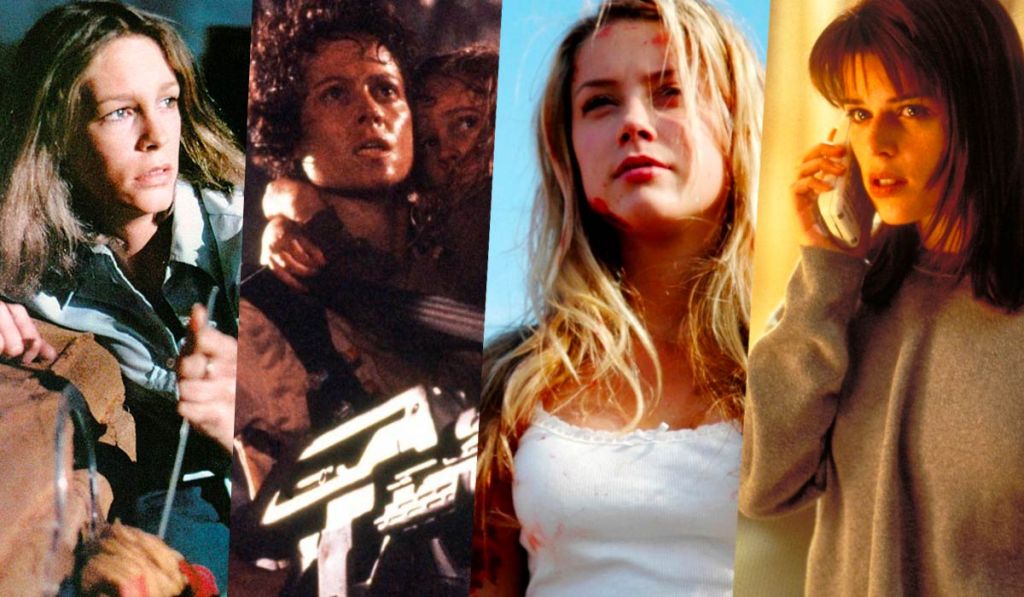
Final/last girls of horror movies

Another thing that makes psychological horror, psychological horror are the themes. These types of movies usually tackle the emotions and mentality of the audience rather than their physical reactions. Psychological horror usually have a theme of creating “discomfort or dread by exposing common or universal psychological and emotional vulnerabilities/fears and revealing the darker parts of the human psyche that most people may repress or deny,” as stated by Wikipedia.

https://www.filminquiry.com/beginners-guide-psychological-horror/ https://the-artifice.com/six-archetypal-horror-characters-and-why-they-are-important/ https://en.wikipedia.org/wiki/Psychological_horror
“Split” (2017) Opening Scene Film Analysis

https://www.youtube.com/watch?v=QhVYKO22FjU

Today I decided to look at more openings from psychological horror films. The one that I found seemed to be close to what Isabella and I want to do for our film opening so I decided to see how the director used different elements to create the tone of suspense and anxiousness. As I was watching the scene, I realized that the opening scene did have a point of view shot from the guy who kills the father. I was able to distinguish this shot because the camera was not as steady as the other shots. This unsteady movement of the camera created a sense of anxiousness because we knew that it was a point of view shot from someone walking were not able to see who was approaching the dad until after he killed him. In addition to the point of view shot, the mise en scene of the scene was very casual, the girls and parents are all seen wearing t-shirts, jeans, and ordinary pieces of clothing making the scene seem like an ordinary day, the props were nothing out of the ordinary except for the mask and gas that the guy with split personalities uses on the girls. The use of these unordinary props lets the audience know that he is not like the others which builds suspense and anxiousness because no one know what is going to happen.

Which Camera Movement Works Best For Point Of View Shots?

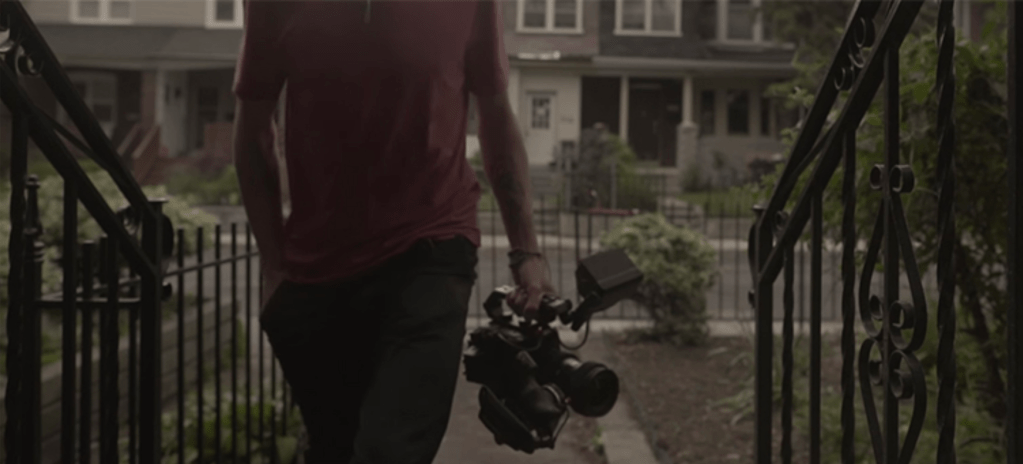
After watching the clip of, “It Follows” I knew that we were going to incorporate the animosity of the monster. However, we also wanted to include the point of view of the monster without getting the point of view shots mixed up with the overall shots of the situation. I thought about this for a while and then came up with the idea of using a handheld camera for the monster. However, I was not sure if the handheld camera would be the best option for the point of view shots so I decided to do some research. It was difficult to find much about whether using a handheld camera would be the best option to shoot a point of view shot. At the end of the day, I did end up finding a website that helped in reassuring me that a hand held camera would work just fine for the point of view shot. The article, “What Camera Movement Should You Use — and When and Why?” by Zach Ramelan talked about why certain camera movements should and should not be used and how they effect the final outcome. Although it did not go into depth about handheld cameras it did say using handheld cameras can, in some instances, “bring the viewers in while making them anxious.” When I read this sentence I knew that this was the type of camera movement we would use to distinguish the monster’s point of view from the other shots because we want to not only distinguish the shots, but also create some anxiousness in the audience. In addition to this, the author described the handheld camera technique as shaky and I thought that having that shaky element would distinguish the point of view from other shots since the rest are most likely going to be shot on a tripod and this would help clear up the different types of shots.

“What Camera Movement Should You Use — and When and Why?” by Zach Ramelan: https://www.popmatters.com/what-is-psychological-horror-film-2495736567.html

My First Blog Post

Movie Genre: Psychological Horror

When deciding what our movie clip would be about, my partner, Isabella, and I knew for sure that we wanted to work on a horror movie. However, there was one slight problem. Prior to this I had only ever seen one horror movie. Although I hadn’t seen a ton of films in the horror category, I knew more about its conventions than any other type of genre. We both knew that this would bring up a lot of difficulties so I took it upon myself to watch as many horror movies as I could during the weekend. Some of the ones I watched were: “It”,”Us”, “Get Out”, and “The Conjuring”. Although this terrifying experience lead to many sleepless nights, I understood more about how horror movies are sequenced and how even the smallest things can have a huge impact on the way the film turns out. With the newly found knowledge I decided to look into the different types of horror movies.

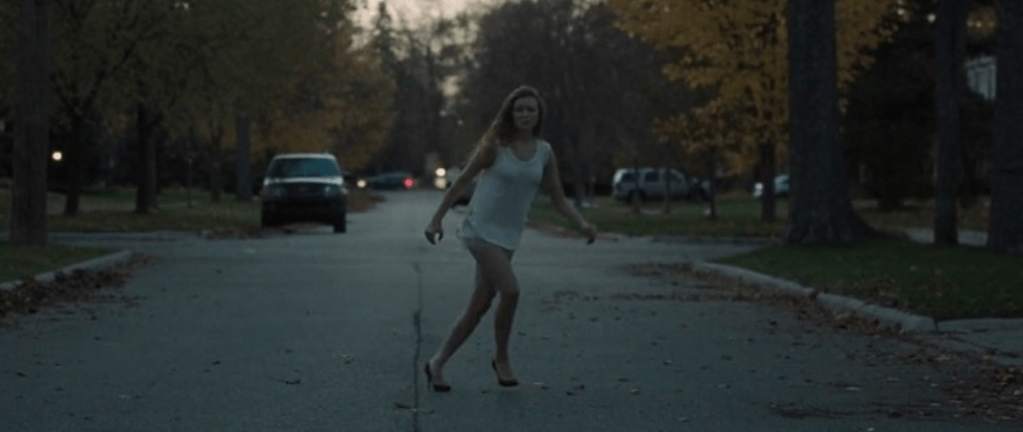
My partner told me about psychological horror films and they seemed pretty interesting so I decided to look at different opening scenes from psychological horror. The one that stood out to me was an opening scene from the film,”It Follows.” In this scene, a terrifying and suspenseful mood is created for the rest of the movie through the fast pacing of the opening scene. When the scene opens there is no slow and deep introduction of the characters. Instead, it starts off by showing a girl running away from something that the camera never shows. Throughout the next couple minutes of the opening scene, the audience is still not informed about what is happening and therefore infers that the girl is being chased by a monster through the cinematography such as the long shot of the girl running. The long shot shows the girl’s scared movements and how she is looking all over the place in a nervous manner, this lets the audience know that something is definitely wrong. Shortly after, the girl dies in what appears to be a beach. This fast paced introduction creates a tone of horror and suspense because the audience is aware that whatever was following her is dangerous and vicious but they do not know exactly what the thing was that was following her. My partner and I found this really interesting and decided that we wanted to incorporate this anonymity into our opening scene.

Design a site like this with WordPress.com
Get started